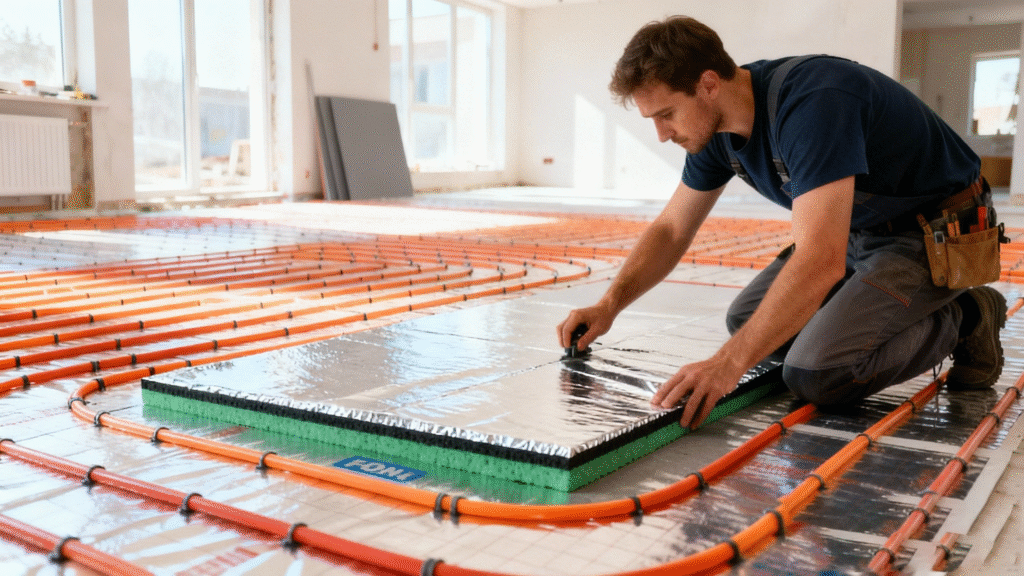
When underfloor heating feels “weak,” the system is often doing exactly what physics allows: it is warming the structure first. If the insulation layer is under-specified or poorly installed, heat is pulled downward, warm-up becomes slow, surface temperatures feel uneven, and the easiest “fix” turns into higher flow temperatures or longer runtimes. That can improve comfort in the moment, but it usually increases operating cost and puts more stress on the floor build-up over time.
This article stays close to what actually determines results on site. It explains how different floor assemblies (wet screed systems vs. dry panel systems) change what you should expect from XPS, how to choose thickness and compressive strength based on real loads, and which installation details become impossible to correct once the screed is poured. It also covers the buyer side: how to read specifications and documentation in a way that prevents surprises, especially when batches, tolerances, labeling, or packaging quality vary. Get these basics right and underfloor heating becomes far more predictable.
Why underfloor heating performance depends on insulation first
When people say “the underfloor heating isn’t strong enough,” what they usually mean is the room doesn’t warm up on schedule, the floor feels warm in some areas and lukewarm in others, or the system has to run for hours to feel noticeable. In real projects, those complaints rarely come from a lack of heating capacity. They come from heat going where you don’t want it to go—down into the slab, down into a cold void, or sideways into uninsulated edges.
This is also why insulation problems are so expensive: they don’t look dramatic on day one. The system turns on, temperatures move, everyone assumes it’s fine. Then winter hits, the homeowner starts using timed schedules, and the weakness shows up. Teams “solve” it by raising flow temperature (hydronic) or extending runtime (electric). Comfort improves, but efficiency drops, and the floor assembly sees harsher thermal cycling. That’s when minor details—gaps, compressed boards, cold-edge bridging—stop being theory and start becoming service calls.
If you want a predictable system, the simplest mindset is this: underfloor heating is not just a heater under the floor. It’s a controlled heat-up of an entire floor build-up. XPS insulation is one of the layers that decides whether you’re heating the room—or paying to warm the structure beneath it.
Know your floor build-up before you choose XPS
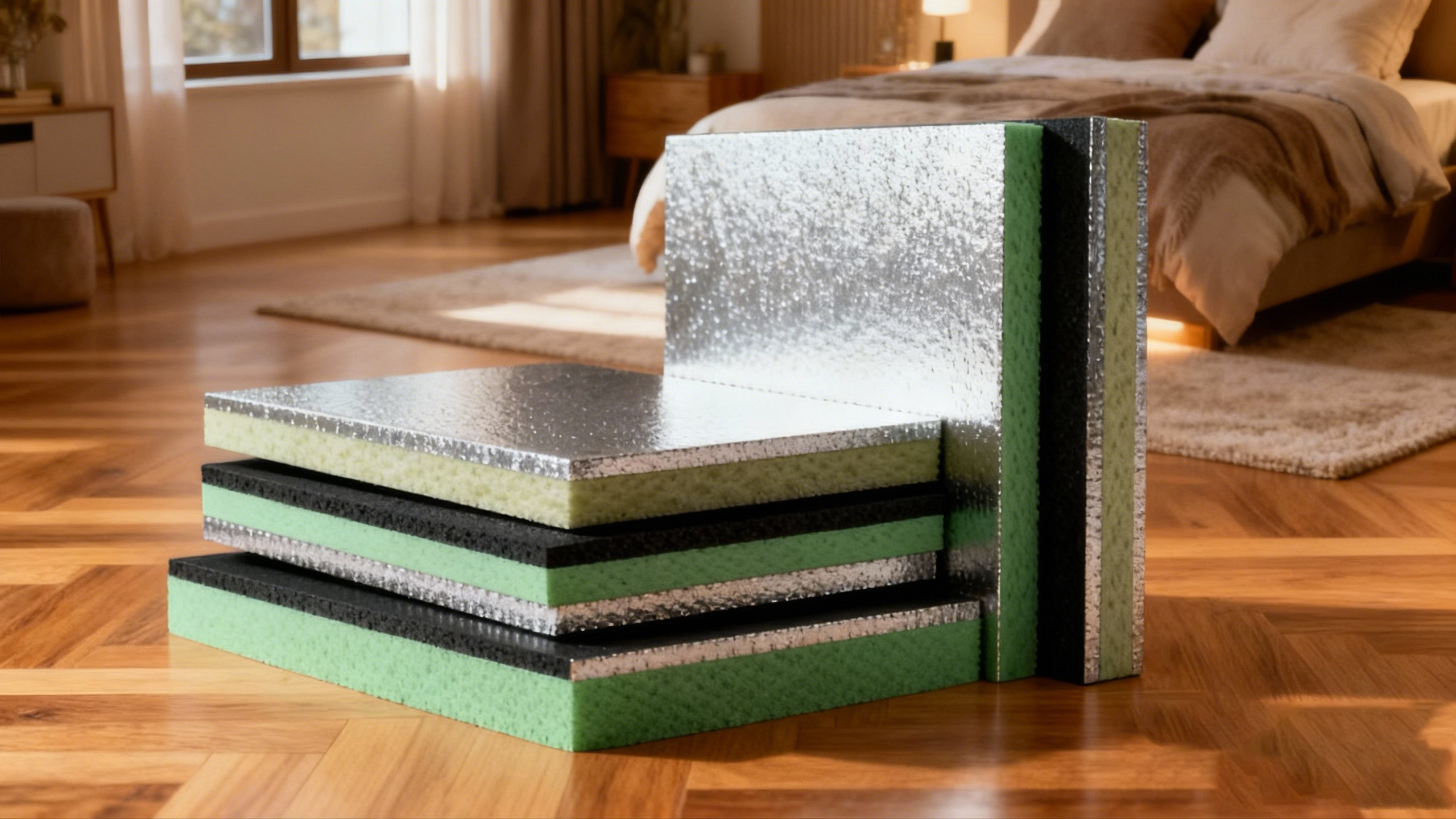
XPS selection becomes much easier once you stop treating every project the same. The board that works perfectly under a thick screed in a dry apartment can be the wrong choice for a ground-floor renovation with moisture risk and limited floor height.
Wet systems (screed/levelling compound above the heating) place steady pressure on the insulation layer. You’re supporting a heavy topping plus finishes, and that load is there every day for years. Wet construction also means your insulation sits through water exposure during the build—spills, wet trades, curing moisture—and then is asked to perform under heating cycles. In that context, XPS isn’t only about insulation value. It’s also about staying stable and flat under long-term conditions.
Dry systems (panels/plates/modules) are different. You often fight millimeters: if the board thickness varies, if the base isn’t level, or if joints are sloppy, you get air gaps. Air gaps can show up as uneven heat transfer and uneven floor feel. Dry systems tend to reward boards with consistent dimensions, good edge fit, and reliable flatness.
Then there’s the building condition. A ground floor or basement behaves differently from an intermediate floor. Moisture risk is usually higher, and the temperature boundary is colder. That pushes you toward low-absorption insulation and careful vapor control planning. And finally, loads are not “residential = light.” Kitchens, islands, partitions, storage, commercial foot traffic—real life doesn’t read the brochure. If the insulation is under-graded, the movement may not show immediately, but it will show eventually, usually as cracking or hollow-sounding spots.
XPS selection tips that actually move the needle
Thickness is the lever that most directly affects how the system feels day to day. If insulation is too thin for the boundary condition, the system still warms, but it warms slowly because a meaningful share of energy goes into the structure below. People notice this most in morning warm-ups and in homes where heating is run on schedules. The floor becomes late, and owners start running it longer to compensate. That is exactly how operating costs creep up while comfort still feels average.
Compressive strength is where many projects quietly go wrong. Underfloor heating boards sit under screed and finishes, and they live there under constant load. If a board compresses or creeps over time, you don’t just lose insulation thickness—you risk a floor that loses flatness, and flatness is what rigid finishes depend on. This is why buyers commonly specify by compressive strength (often referenced as 300 kPa, 500 kPa, etc.). The right grade depends on the floor design and load reality, but the principle is consistent: if the floor above is rigid and the load is higher or concentrated, you need more strength margin.
Moisture resistance matters because moisture is sneaky. You can install a beautiful heating system and still end up with a damp floor build-up if the vapor strategy is unclear or the environment is wet. Insulation that takes on water can lose thermal performance and create conditions for odor and mold concerns. XPS is commonly selected in slab-related assemblies precisely because it is designed for low water absorption compared with many foam alternatives, which gives you a more forgiving baseline. But it’s not magic: moisture control still requires the right membranes, sealed joints, and practical site discipline during storage and installation.
How to read XPS specs like a buyer, not like a brochure
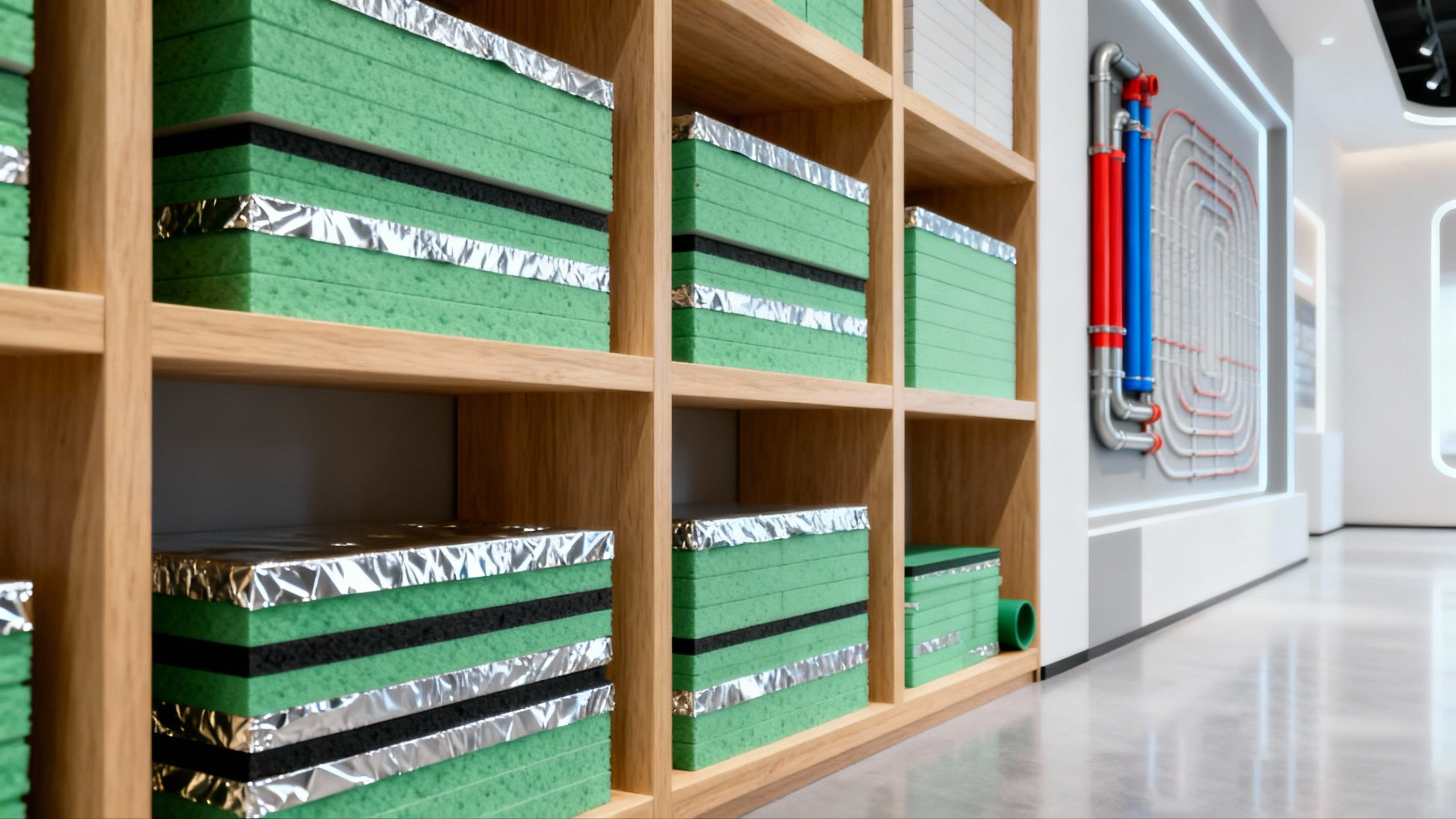
A good purchase decision is one you can defend later—internally, to your customer, and on site. That starts with treating “XPS” as a category, not a guarantee. In global trade, XPS boards are often specified with reference to established product standards such as ASTM C578 (commonly used in North America) and EN 13164 (commonly used across Europe and widely referenced in export documentation). These standards matter because they create a shared language for declared properties and classifications. When a supplier is serious, the documentation is not vague—it clearly matches the grade, thickness range, and properties being shipped.
Thermal conductivity (lambda) is important, but it’s easy to overvalue it. Two boards with similar lambda values can perform very differently in a floor if one has inconsistent thickness or poor edge quality that leads to gaps. Underfloor heating is sensitive to continuity. Small gaps become local cold zones. That’s why thickness tolerance, dimensional stability, and edge profiles deserve just as much attention as lambda in practical procurement.
Compressive strength also needs to be read carefully. The number is meaningful only if it is consistent and documented. Professional buyers typically ask for a datasheet and then check that the delivered pallets are labeled in a traceable way so that the batch can be identified if there’s ever a question later. This isn’t paranoia; it’s how you avoid the common headache where the first shipment performs well and the second shipment behaves differently.
If you’re sourcing for distribution or import, it’s also worth asking about packaging and shipping protection. XPS can arrive within spec and still be a problem if corners are crushed, edges are damaged, or boards have been exposed to weather for weeks. Those installation defects turn into gaps, and gaps turn into performance complaints.
Installation realities that decide the outcome after the screed goes down
On-site, the best insulation board can be undermined by rushed workmanship. Underfloor heating assemblies reward boring discipline: a reasonably level base, dry storage, clean layout lines, and tight jointing.
Flatness and support matter because boards don’t like rocking. If the base is uneven and boards bridge high points, you get voids. Voids become movement when people walk, when screed is poured, or when the floor heats and cools. Movement becomes cracking and noise. This is one of those issues that rarely shows up during installation and almost always shows up after handover, when it’s hardest to fix.
Joint quality is another make-or-break factor. Underfloor heating is basically controlled heat flow, and gaps are uncontrolled heat flow. Tight joints, staggered seams, and correct edge engagement (especially with T&G edges) reduce thermal bridging and help keep the surface temperature more even. The goal isn’t perfection for its own sake; it’s to avoid long linear cold strips that customers can literally feel with bare feet.
Perimeter detailing is often underestimated. Edges are where heat escapes and where screeds tend to crack if movement is constrained. A proper perimeter insulation strip helps reduce thermal bridging at walls and allows the screed to expand and contract without fighting the structure. It’s cheap insurance compared to fixing perimeter cracking later.
Finally, moisture strategy needs to be intentional. Insulation is not a replacement for vapor control. If the project has moisture risk—ground contact, basements, or uncertain slab conditions—then membrane placement, overlaps, and sealing details should be decided before the first board is placed, not improvised after.
Who should work with a real XPS manufacturer, and what value they get
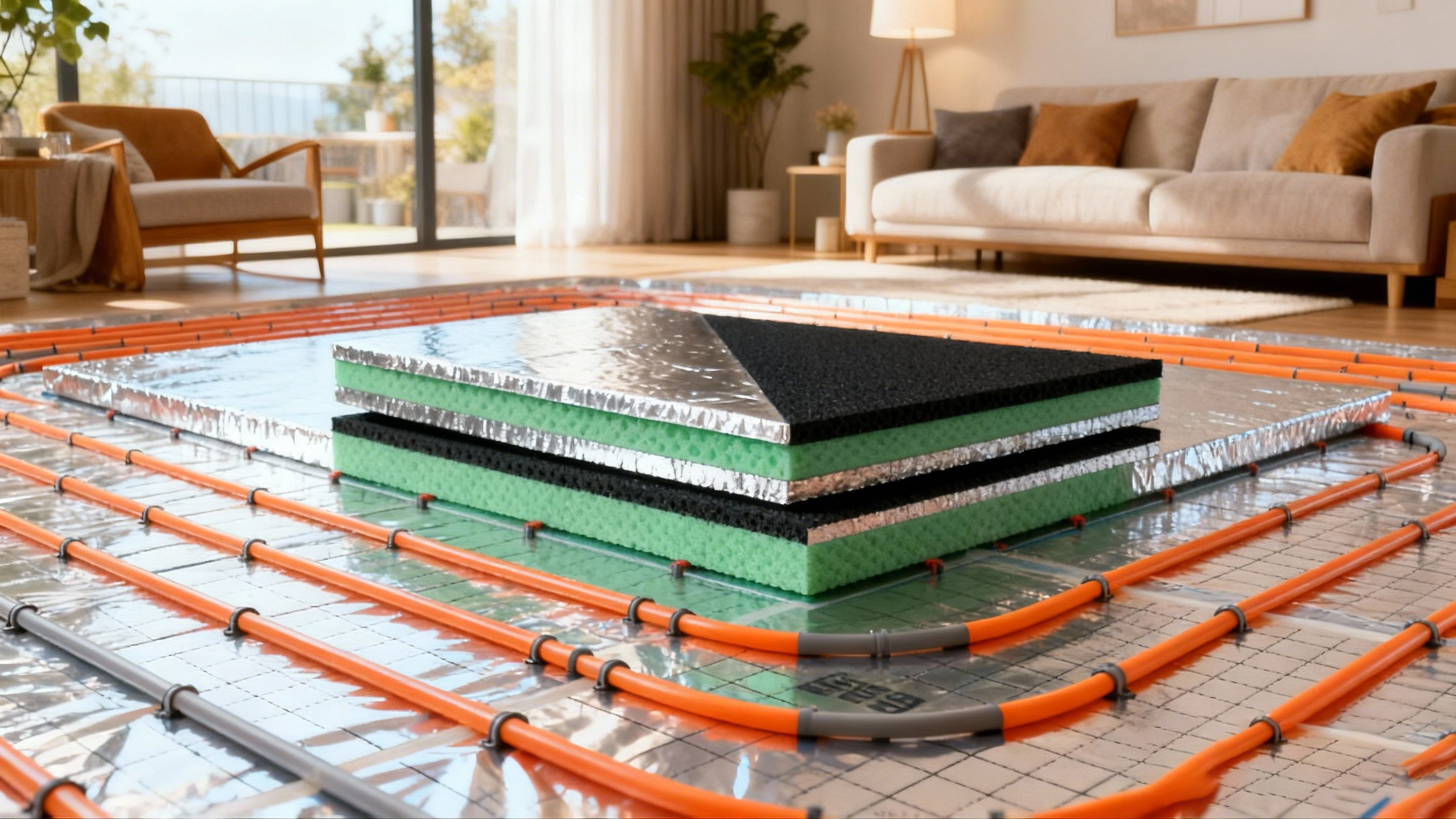
Distributors and wholesalers who care about repeat business are a strong fit for direct manufacturer cooperation. Your customers don’t just buy boards; they buy outcomes. When you supply XPS that installs cleanly, stays flat, and matches the declared grade consistently, contractors stop switching brands to save a small amount per pallet. They reorder because it reduces their risk. That’s the real commercial value: fewer complaints, fewer returns, fewer awkward site arguments, and a product your sales team can stand behind confidently.
Importers and trading companies are also a natural fit when you’re building a long-term program rather than chasing one-off deals. Your biggest risk is inconsistency—one shipment looks great, and the next creates disputes. A true manufacturer relationship is valuable when it includes batch traceability, stable production controls, consistent labeling, and export-oriented packaging. Underfloor heating projects are specification-driven and schedule-driven; reliability is worth more than clever pricing.
Underfloor heating contractors and flooring installers benefit because they’re the ones who get the call when comfort isn’t right or when a floor cracks—regardless of who supplied the insulation. Working with a manufacturer that can support selection (thickness, strength grade, edge type) and deliver consistent board dimensions reduces surprises on site. It also improves productivity: boards that are flat, clean-edged, and consistently sized simply install faster and with fewer gaps.
Tender and project buyers benefit when they need documentation that holds up in approvals. If a manufacturer can supply clear datasheets aligned with commonly recognized standards (ASTM/EN depending on market), maintain stable product grades such as 300 kPa and 500 kPa, and ship with proper labeling and protective packaging, approvals typically go smoother and site teams have fewer reasons to reject material at delivery.
As for trustworthiness: a real, professional manufacturer should be judged by what you can verify in practice—consistent grades without quiet substitution, traceable batch labeling, stable tolerances, and the willingness to say “this grade is not suitable for that load condition” when that’s the truth. That’s how insulation stops being a gamble and becomes a controlled part of your underfloor heating performance.
From a buyer’s perspective, XPS for underfloor heating is not a “swap-in” commodity. It is a critical performance layer, and the real risk is not one bad number on a datasheet—it. It is inconsistent that shows up on site. Thickness variation, damaged edges, weak packaging, or mixed batches can create gaps and thermal bridges that lead to slow warm-up, cold полос, higher energy use, and sometimes floor issues that are expensive to repair once the screed is down.
What matters most in supplier evaluation is what can be verified and repeated: documentation aligned with the target market standard (ASTM C578 or EN 13164), stable supply of consistent grades, reliable compressive strength and thickness tolerances, and clear labeling with batch traceability. Packaging and logistics protection should be treated as part of quality, not an afterthought, because corner damage and moisture exposure directly affect installation. Finally, a strong supplier will recommend the correct grade for the assembly and loading conditions—even when it costs more upfront—because that is what reduces claims, protects schedules, and keeps projects repeatable.